The project is the creation of the first eco-innovative production biofabrication plant
Background material On the project of the creation of the first eco-innovative bio-factory for the production of organic fertilizer “Sprout” in Ukraine PAROSTOK® UniFlor 2019 More than a hundred countries have signed at the United Nations Conference on Environment and Development
an important document “Preamble to the Agenda for the 21st Century”, which states:
“Humanity is experiencing a decisive moment in its history, the world is facing problems
increasing poverty, hunger, disease, illiteracy and ongoing environmental degradation
systems that depend on the well-being of mankind … The only way to secure more
a safer, more prosperous future is a solution to the environment
and economic development in a complex and coherent manner. ” Such is the new modern doctrine
human development.
The state of ecological systems in Ukraine is greatly influenced by agriculture
production, especially livestock (poultry).
In Ukraine, as of July 1, 2018, the poultry population reached 246.53 million,
up 4.7% from the same period last year. Production of chicken
litter reaches over 30.0 million tons per year. About it reports the Interregional Union of poultry and feed producers of Ukraine (https://latifundist.com/novosti/36921-v-ukraine-
goals-ptitsy-adult-on-23-mln-goals). In quantitative terms, it is millions of tonnes of organic raw material that, instead of generating economic benefits, is transformed
a gigantic source of environmental pollution and emissions
greenhouse gases into the atmosphere. This source is a haven for huge flocks of wild birds,
A variety of rodents find shelter here. All this combined
converts open storage area from all sides into a powerful incubator
the emergence, growth and spread of pathogenic microflora, a variety of viruses, and
means infectious and invasive diseases.
Large agro holdings, by investing millions in advertising campaigns, save on
recycling of production waste. If such management continues, the damage will be
equivalent to the use of biological weapons. In the waste of poultry breeding
Dangerous microorganisms that can cause an outbreak. In particular, pathogenic
strains of E. coli EHEC, which have infected thousands in Europe and dozens
have died. Usually poultry farms waste their own production and manure
low-end hazard – fourth. But environmentalists believe they are significant
they are more dangerous and should belong to the second or even the first class (high risk and
extremely dangerous) as they can become a source of biological contamination.
According to the World Health Organization, manure, manure and sewage
livestock and poultry enterprises may be a transfer factor of more than 100
pathogens of infectious and invasive diseases. And the organic waste itself is to serve
a favorable environment for the development and survival of pathogenic microflora, to contain
increased amount of heavy metals, pesticides, medicines,
radioactive substances, weed seeds and other contaminants.
Currently, there are virtually no farms in Ukraine for processing
waste treatment facilities are used. In most cases, the so-called
ditches or fields where raw material is discharged. After filling the ditches, the contents of the fields
exported to the fields without any processing. In Europe, for about 10 years, a law has been in place
prohibits the introduction into the fields of unprocessed organic animal husbandry. Also in the West
due to the risk of raw material entering the soil, no deep storage of the waste is prohibited,
which is widely used in Ukraine. The main reason for low equipment
Ukrainian agricultural and livestock enterprises with modern equipment
there is a lack of funds for recycling and recycling, especially as the crisis is severe
reduced the agricultural activity of Ukraine.
Thus, the main task facing the scientists and employees of the agroindustrial complex
Ukraine – to create an environmentally sound one in the near future
agricultural production capable of not destroying the environment at the same time
time, to provide the population of the country with the necessary food.
This necessitates:
improvement of existing technologies of processing and use of manure and manure, creation of new technologies and complexes of machines that correspond to modern technologies of production of agricultural products taking into account different types of producers and forms of labor organization; environmental requirements, ie ensuring a guarantee of minimal pollution of the environment, obtaining environmentally friendly human food and animal feed. The traditional methods of utilization of manure and manure used in extensive agriculture are now unacceptable due to the lack (or complete absence) of land for growing crops in agricultural organizations and peasant farms, so other methods of manure / manure disposal are required. The solution to the problem of protection of the environment and natural resources from pollution is only possible with a comprehensive approach and the development and implementation of technologies and technical means intended for processing of agricultural waste. The main objective is to obtain additional useful products and protect the environment. Modern society has long been confronted with the urgent problem of environmental pollution and the consequences of irrational use of natural resources. The development of the chemical industry in the second half of the twentieth century caused the widespread use of fertilizers and pesticides in agriculture. According to the Ukrainian Agrarian Confederation (http://agroconf.org/), fertilizers have fallen 14 times in the last 20 years. According to the physiological needs and genetic potential of the soil, 140-240 kg of active nutrient (hereinafter referred to as DWP) per hectare should be introduced. Thus, in 1990, an average of 141 kg / ha of DWP was introduced, the share of fertilized areas with mineral fertilizers was 82%, and 18% accounted for organic fertilizers, which corresponded to optimal nutrition standards. As of 01.01.2009, the total share of fertilized areas in Ukraine was 65% (48 kg / ha DWP). At the same time, the share of organic fertilizers in the last five years does not exceed even 3% (0.6 t / ha). The application of mineral fertilizers in high doses with plant protection products contribute to agrochemical degradation, biotoxicosis and soil dehumidification. Consumer attitudes towards soils have resulted in the fact that more than 20 million hectares of agricultural land are now recognized as degraded and 14 to 17 million are considered erosion hazardous. There is a tendency to increase the accumulation of toxic substances and heavy metals. The disappearance of the black earth is one of the most serious problems in Ukraine. Every year, the losses of Ukraine from the impact of negative processes of intensification of agricultural production with the use of chemicals are more than 500 million tons of soil, with which is lost 24 million tons of humus, 1 million tons of nitrogen, 700 thousand tons of phosphorus, 10 million tons of potassium. Currently, farming methods throughout
the world is undergoing deep reform. Intensification technologies have lost theirs
efficiency – more energy is consumed than food production
turns out. Increasing the use of fertilizers is no longer appropriate
increase in productivity. Therefore, biological factors are becoming more widespread
increasing plant yields and maintaining soil fertility in the 21st century,
the declared age of biotechnology.
To prevent the negative effects of soil depletion and compensate for removal from
nutrient harvest, it is necessary to follow the order of crop rotation and norms
fertilizing, returning sufficient nutrients to the soil. With
NAAS of Ukraine recommends increasing the share of organic fertilizers to 8-10 tons
/ ha.
One of the quite effective agricultural techniques in this direction is the use of
technologies of production of organic fertilizer “Sprout” – fertilizers of new generation on
based on PAROSTOK biotechnology.
PAROSTOK Bionanotechnology is the “best available technology” according to
definition of the 1992 Helsinki Convention, ie:
• based on the latest achievements of science and technology. Two leading research institutes of the world have recognized
and confirmed the innovativeness of the world;
• aimed at reducing the negative impact on the environment;
• allows to combine the priorities of the state environmental policy and the state
commercial efficiency of production and distribution of products.
The PAROSTOK program combines ecology, agriculture, food biotechnology,
waste management, climate protection and the environment, while there are
an attractive investment business.
PAROSTOK products have high export potential in Europe, Asia, Africa as well
also in the countries of North and Latin America.
PAROSTOK Organic Fertilizer Complex is a high value added product.
The project complies with IPPC 1996 (Integrated Prevention and Control)
Pollution) from the location of industrial facilities.
Project values
• Healthy nature, healthy products, healthy family;
• Use of poultry waste as a renewable raw material
material resource, and as a platform for sustainable development.
Payback of the PAROSTOK system is guaranteed by:
• low cost of the product;
• availability of a permanent, renewable source of raw materials and components;
• use of modern energy efficient equipment;
• application of high environmental standards of doing business;
• professional management;
• prospects of direction;
• competitive prices for products.
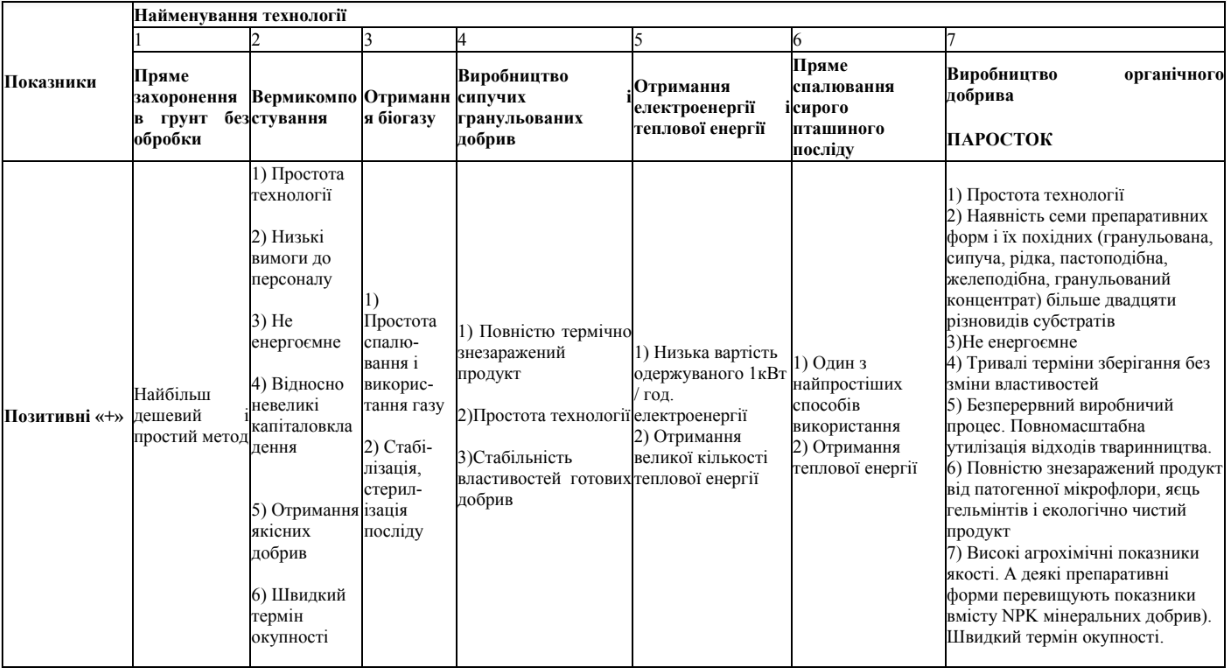
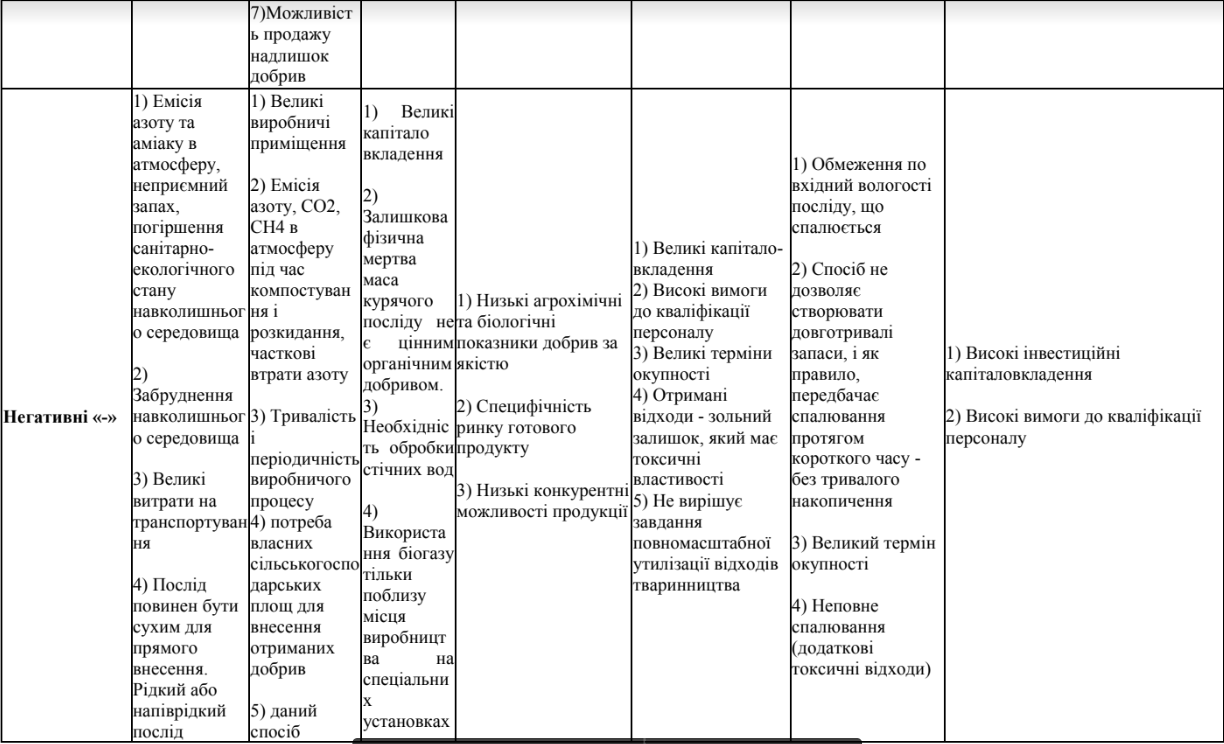
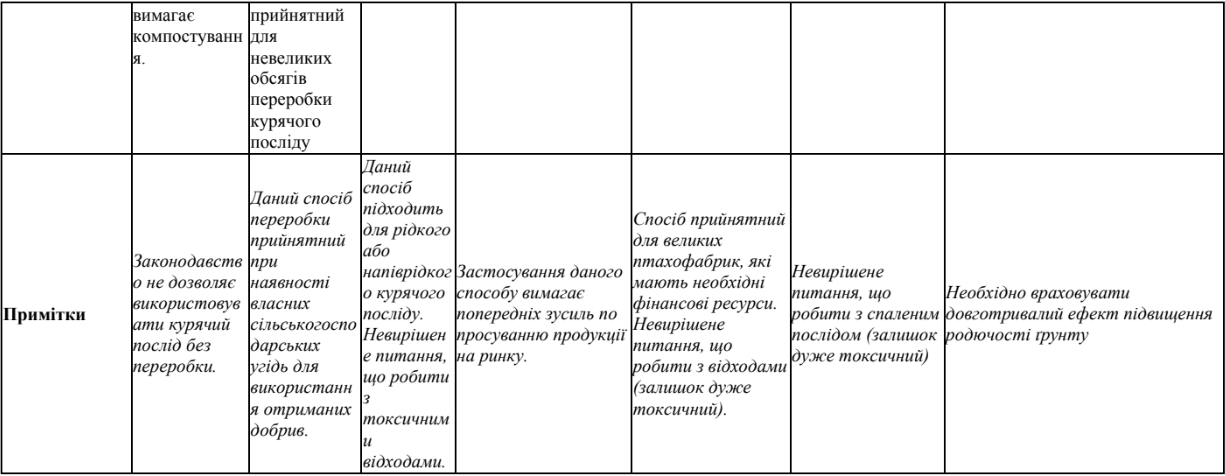
Table. Comparative characteristics of chicken manure disposal technologies